
We live in a world that never shuts off. Notifications ping, deadlines stack, and even when you finally collapse into bed, your mind keeps spinning. You tell yourself to relax—but your body doesn’t listen.
The tension stays. The shoulders stay tight. The brain hums in the background like a machine that refuses to power down.
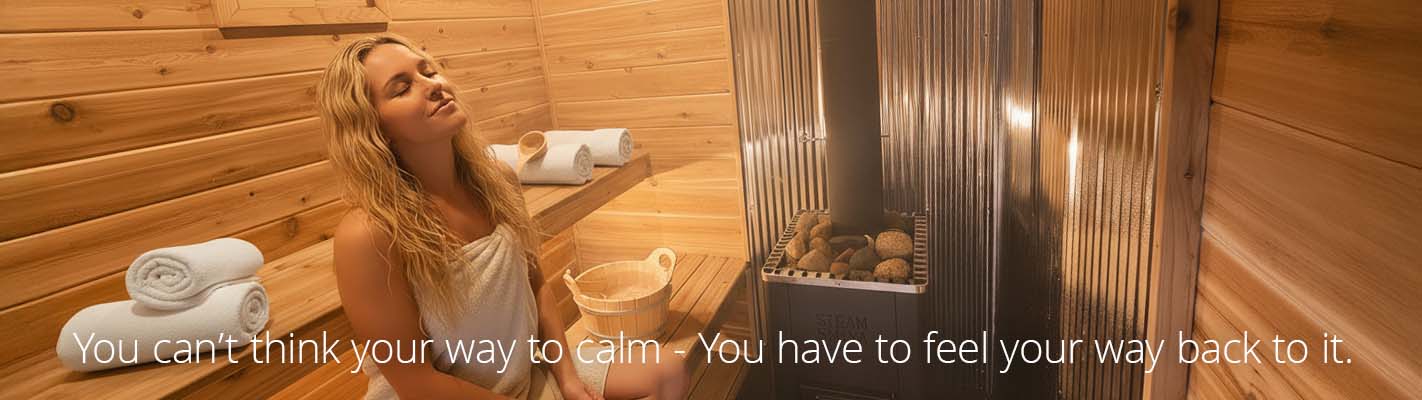
And then, there’s the sauna—ancient, simple, and profoundly effective. Step inside, and you rediscover something your body has known for centuries: how to let go.
Why Modern Life Keeps You “Wired”
The Physiology of Chronic Stress
Most people live in a constant state of fight or flight. Cortisol and adrenaline flood the body, keeping muscles tight and breathing shallow. Over time, this imbalance creates chronic fatigue, anxiety, and burnout APA.
Did you know? Scientists call this “allostatic load” — the wear and tear caused by constant stress activation.
Why Your Mind Can’t Turn Off—Even When You Rest
Constant stimulation (phones, caffeine, multitasking) traps the nervous system in high gear. Even when you want to relax, your physiology won’t cooperate.
The solution isn’t more mental effort—it’s a physical cue to shift gears. That’s what heat does best.
Ancient Wisdom: How Heat Became a Healing Ritual
The Origins of Sauna and Heat Therapy
The Finnish sauna dates back thousands of years. Across cultures, heat was seen as medicine—the Finnish sauna, Native American sweat lodge, Japanese onsen, and Roman thermae all share one purpose: rebalance body and mind through heat.
“Step into heat to come back to yourself.”
A Shared Global History of Heat and Healing
Sweating rituals marked life’s transitions: before hunts, after childbirth, or following illness. They weren’t luxuries; they were ways to release, purify, and prepare.
Your modern sauna ritual continues that lineage—a return to calm through ancient wisdom.
The Science of Heat: How Sauna Rebalances the Mind and Body
How Sauna Use Lowers Cortisol and Stress Hormones
Studies confirm what our ancestors intuited. Regular sauna use reduces cortisol and increases beta-endorphins—your body’s natural mood elevators (Sutkowy et al., 2018, Journal of Human Kinetics).
Harvard Health notes that consistent sauna sessions improve both cardiovascular function and subjective well-being (Harvard Health, 2021).
Quick fact: Cortisol drops and endorphins rise within minutes of exiting a sauna session.
Heat Therapy and the Parasympathetic Nervous System
As the body heats up, blood vessels dilate and circulation increases. When you exit the sauna and begin to cool, your parasympathetic (“rest and digest”) system takes over—creating a deep, meditative calm (University of Eastern Finland, 2015).
Endorphins, Circulation, and Emotional Release
The heat triggers endorphins similar to exercise or laughter. This full-body exhale—the moment of “finally letting go”—isn’t imagined. It’s a physiological reset.
“I didn’t even realize how tense I was until my first few sessions. My body remembered how to relax.” — Regular Sauna User
Turning Heat Into Habit: Building Your Sauna Stress-Relief Routine
How to Create a Calming Sauna Ritual
Create structure and repetition—your nervous system learns safety through consistency.
Try this ritual:
-
Set the tone: Silence phones and distractions.
-
Breathe deeply: Exhale longer than you inhale.
-
Stay for comfort, not endurance: The goal is release, not suffering.
-
Cool down slowly: Let the calm integrate.
 Think of it as “mindful heat meditation.”
→ Explore mobile sauna options here.
Morning vs. Evening Sauna for Relaxation
Morning sessions invigorate circulation; evenings amplify sleep quality by dropping core body temperature post-session (Mayo Clinic, 2022).
Pro tip: End your sauna with a brief cool shower or outdoor air. This mimics natural circadian rhythm cues for rest.

Pairing Sauna With Meditation or Breathwork
Incorporate slow breathing or guided mindfulness to deepen relaxation.
A simple pattern:
Inhale for 4 seconds → Exhale for 6 seconds.
Repeat.
Feel your pulse slow and your body settle into balance.
Real Stories, Real Calm: What Happens When You Stick With It
“I Finally Felt My Body Let Go”
Consistency teaches the body safety. With each session, your system learns: heat → sweat → cool → relax.
“There’s a moment when the noise in your head goes quiet,” one user shared. “You’re not forcing relaxation—you’re allowing it.”
From Overdrive to Inner Stillness
That moment—when your mind goes quiet and your breath slows—is the shift from wired to peaceful. You don’t have to earn it. You just have to step into it.
Safety, Consistency, and Trust
How Often Should You Use a Sauna for Stress Relief?
Most people thrive on 2–4 sessions per week, 15–25 minutes each. Always hydrate before and after.
Listen to your body—it knows what’s enough.
→ Learn about buying your own mobile sauna.
Who Should Modify or Avoid Sauna Use
Those with cardiovascular issues or during pregnancy should consult a physician before regular use (Harvard Health, 2023).
Trust comes from transparency—wellness works best with wisdom.
The Takeaway: Remembering Peace in a Heated World
You don’t have to live in constant overdrive. Stress is a pattern your body learned—and through heat, it can unlearn it.
When you step into the warmth, your body does what it was always meant to do: release, recover, and rebalance.
→ Start your journey. Discover where you can Rent, Buy, or experience a Minnesota Mobile Sauna.

References
-
American Psychological Association – Stress Effects on the Body
-
Sutkowy, P. et al. (2018). The Effect of Sauna Bathing on Stress Hormones. Journal of Human Kinetics.
-
Harvard Health Publishing – Sauna Health Benefits
-
Laukkanen, T. et al. (2015). University of Eastern Finland Sauna Study.
-
Harvard Health – Sauna Safety Tips